Root vegetable cellar storage in Canada

Root cellars and unheated basement rooms remain a practical way to keep potatoes, carrots, beets and parsnips through a Canadian winter. The principle is straightforward: hold produce just above freezing in high humidity, away from light, with enough air movement to prevent mould. What varies is the building — a dug hillside cellar in rural Newfoundland, a partitioned corner of a 1950s basement in Ontario, or a ventilated cold room added during renovation in Alberta.
Target conditions for root crops
Most root vegetables store best between 0 °C and 4 °C with relative humidity between 85 percent and 95 percent. At these levels, potatoes remain firm, carrot skins stay hydrated and beets resist shrivelling. Temperatures below 0 °C cause cell damage that appears as water-soaked flesh after thawing. Temperatures above 7 °C accelerate sprouting in potatoes and softening in carrots.
Darkness matters as much as temperature. Light triggers greening and solanine development in potatoes. Even brief exposure to a bare bulb each time the cellar door opens can affect quality over months. Store roots in opaque bins or cover stacks with burlap or clean straw.
Quick reference — cold-moist group
Potatoes, carrots, beets, parsnips, rutabaga, celeriac and sunchokes share similar requirements. Keep them together, separate from onions and apples, which emit gases that shorten each other's storage life.
Cellar types found in Canadian homes
Dug root cellars
Traditional dug cellars use earth insulation to buffer outdoor temperature swings. In provinces with deep frost penetration — Manitoba, Saskatchewan, northern Ontario — a well-designed dug cellar can hold near-constant conditions from October through April. Two vents, one high and one low, create passive airflow that reduces condensation on walls while maintaining humidity from surrounding soil.
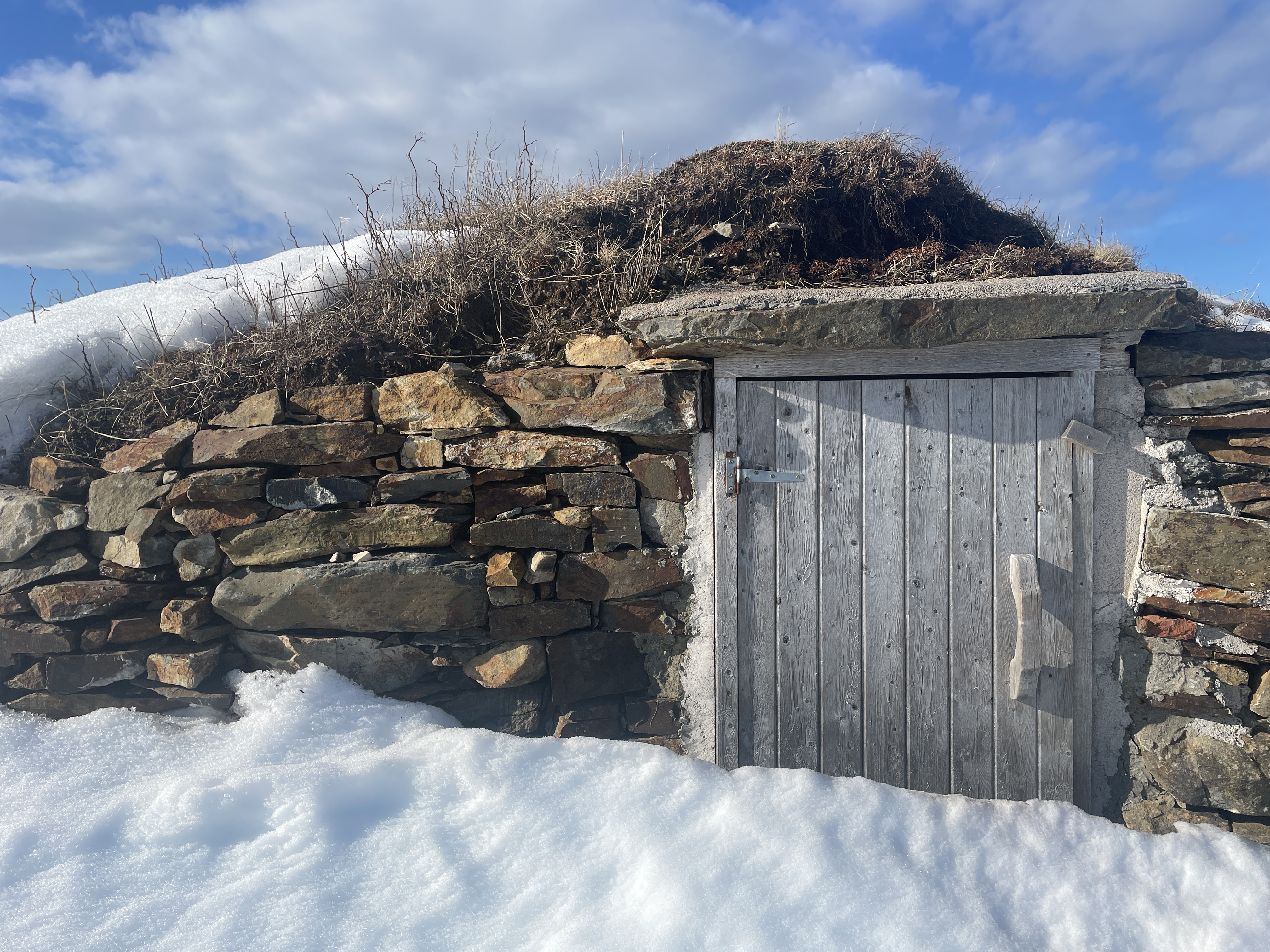
Basement cold rooms
Many urban and suburban homes lack a separate dug cellar but have an unheated basement zone or an old coal room. These spaces work when exterior walls are below grade on at least two sides and a window or vent can be partially opened in fall, then closed during deep cold. Monitor with a simple thermometer-hygrometer; basements that share air with a forced-air furnace often run too warm for long potato storage.
Outdoor clamps before transfer
In regions with mild early winters — parts of coastal British Columbia and southern Nova Scotia — gardeners sometimes mound carrots or beets in field clamps covered with straw and soil, then move them indoors when sustained frost arrives. This buys time when indoor space is limited but requires checking for rodent damage.
Preparing vegetables at harvest
Storage quality is largely decided in the garden. Potatoes for winter keeping should reach full maturity before the tops die back naturally. Cure freshly dug potatoes for one to two weeks at 10 °C to 15 °C in dim light so skins toughen. Brush off dry soil; do not wash. Any cut or bruise becomes an entry point for rot and should be set aside for near-term use.
Carrots and beets store best when harvested after a light frost sweetens roots but before the ground freezes solid. Remove tops close to the crown — leaving stubs invites decay. Trim long taproots only if damaged. Pack in slightly damp sand, peat moss or clean wood shavings inside wooden crates or food-grade plastic bins with drainage holes.
Bin layout and ventilation
Never store roots directly on concrete. Use pallets or 2x4 stringers to allow air under bins. Stack no more than 60 cm deep for potatoes; deeper piles generate heat and CO2 that promotes sprouting. Leave aisles for inspection every few weeks.
Ventilation should exchange air without dropping humidity to desert levels. In January, when outdoor air is very dry on the Prairies, limit intake and rely on moist packing media around carrots. In damp Atlantic basements, increase low-level exhaust to prevent surface mould on walls while keeping produce bins covered.
Regional considerations
Prairie provinces: Extremely dry winter air challenges humidity maintenance. Bins lined with damp sand and occasional floor sprinkling (where drainage exists) are common adaptations described in Alberta Agriculture and Irrigation home gardening resources.
Quebec and Ontario: Freeze-thaw cycles test basement vents. Close intake when outdoor temperatures drop below −15 °C to avoid freezing produce near openings. Insulate vent ducts where they pass through warm zones.
Atlantic Canada: Higher ambient humidity reduces shrivelling but increases mould risk. Wire-mesh bins improve airflow around potatoes compared with solid plastic totes.
British Columbia coast: Mild winters may keep basement rooms above ideal potato temperature. Partial burial or using the coolest exterior wall corner improves results. Monitor sprouting and rotate stock monthly.
Common problems and responses
- Soft rot and foul odour: Remove affected roots immediately. Increase airflow and inspect neighbours for hidden bruises.
- Shrivelling: Humidity is too low. Add damp packing medium or a shallow pan of water (away from direct contact with produce).
- Widespread sprouting: Temperature is too high or light is reaching tubers. Move stock to a darker, cooler zone.
- Frost damage: Mushy tissue after thawing indicates exposure below 0 °C. Relocate bins away from exterior walls and vents.
For food safety context on spoilage and mould, refer to Health Canada food safety guidance. When in doubt about whether stored produce remains safe to eat, discard it.